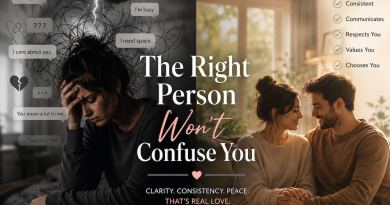

Why You Feel Lonely Even in a Relationship
Loneliness is supposed to be something you feel when you’re single… right?
So when it shows up inside a relationship, it can feel confusing, shameful, and even scary. You’re sleeping next to someone. You talk every day. You’re “taken.” Yet deep down, there’s a quiet ache—a sense that you’re emotionally alone.
And because you are in a relationship, you may not even feel allowed to name that loneliness.
This post is for anyone who has ever thought:
- “Why do I still feel unseen?”
- “Why do I feel more alone now than when I was single?”
- “Is something wrong with me—or with us?”
Let’s talk about why this happens, what it actually means, and what you can do about it.
Loneliness in a Relationship Is More Common Than You Think
First, let’s clear this up: feeling lonely in a relationship does not mean you chose the wrong partner or that your relationship is a failure.
Loneliness isn’t about physical presence.
It’s about emotional connection.
You can share a bed with someone and still feel emotionally abandoned. You can text all day and still feel unheard. You can laugh together and still feel like you’re carrying your inner world alone.
Loneliness shows up when:
- Your emotional needs aren’t met
- You don’t feel safe expressing your true self
- You feel misunderstood, dismissed, or emotionally disconnected
And many people stay silent about it because admitting loneliness in a relationship feels like betrayal.
1. Emotional Needs Are Going Unmet
One of the biggest reasons people feel lonely in relationships is emotional neglect, even when it’s unintentional.
Your partner may be:
- Physically present but emotionally unavailable
- Focused on work, stress, or survival mode
- Loving you in their way, but not in the way you need
You might crave:
- Deep conversations
- Emotional reassurance
- Being asked how you’re really doing
- Feeling chosen and prioritized
When those needs are repeatedly unmet, loneliness grows quietly.
You may stop asking.
You may tell yourself you’re “too sensitive.”
You may convince yourself to be grateful for the bare minimum.
But unmet emotional needs don’t disappear—they turn into loneliness.
2. You’re Not Being Your Authentic Self
Another painful reason for loneliness in relationships is self-abandonment.
This happens when:
- You hide your feelings to avoid conflict
- You downplay your needs to keep the peace
- You censor yourself so you don’t seem “too much”
Over time, your partner isn’t actually relating to you—they’re relating to a filtered version of you.
And even if the relationship looks stable on the outside, inside you feel unseen… because you’re not fully seen.
This is especially common for people who struggle with people-pleasing.
Related Read: People-Pleasing in Relationships: Why It Happens and How to Stop
(This explores how self-silencing slowly creates emotional distance and resentment.)
3. Different Attachment Styles Create Emotional Distance
Sometimes loneliness isn’t about lack of love—it’s about how each of you connects.
If you crave closeness but your partner values independence, you may feel rejected even when they don’t mean to hurt you. If you express emotions openly but they shut down, conversations may feel one-sided.
This is often rooted in attachment styles.
For example:
- Anxious partners may feel lonely when reassurance is inconsistent
- Avoidant partners may feel lonely because intimacy feels overwhelming
- Secure partners may feel lonely if emotional effort isn’t reciprocated
Without understanding these patterns, couples can love each other deeply and still miss each other emotionally.
Related Read: Attachment Styles in Love: How They Shape Your Relationships
(This helps you understand why emotional connection feels easy with some people and exhausting with others.)
4. Conflict Is Avoided Instead of Resolved
Some relationships feel “peaceful” on the surface but lonely underneath.
Why? Because nothing real is ever discussed.
When conflict is avoided:
- Feelings go unspoken
- Resentment builds silently
- Emotional intimacy fades
You may laugh together, function well, and still feel emotionally distant because nothing vulnerable is shared.
True closeness isn’t built by avoiding discomfort.
It’s built by working through it together.
When your emotions don’t have space to exist in the relationship, loneliness becomes your quiet companion.
5. You’re Growing, but the Relationship Isn’t

Growth can be lonely—especially when it’s one-sided.
You may be:
- Healing emotionally
- Becoming more self-aware
- Setting boundaries
- Wanting deeper connection
And your partner may still be operating from old patterns.
When growth isn’t shared, conversations start to feel shallow. Emotional depth feels unmatched. You begin to feel like you’re evolving alone—even inside a relationship.
Outgrowing someone doesn’t always mean leaving.
But it does require honest reflection and communication.
6. Past Emotional Wounds Are Being Triggered
Sometimes loneliness in a relationship isn’t about your partner—it’s about old emotional wounds resurfacing.
If you grew up feeling:
- Emotionally neglected
- Unseen or unheard
- Like love was conditional
Your nervous system may interpret emotional distance as abandonment, even when it’s not intentional.
This doesn’t mean your feelings aren’t valid.
It means healing may need to happen within you, not just between you.
Relationships often reveal wounds we didn’t know were still open.
What You Can Do When You Feel Lonely in Your Relationship
Loneliness is a signal—not a sentence.
Here’s how to begin addressing it:
1. Name the Feeling (Without Blame)
Instead of accusing your partner, speak from your experience:
- “I’ve been feeling emotionally distant lately.”
- “I miss feeling close to you.”
This invites connection instead of defensiveness.
2. Get Clear on Your Emotional Needs
Ask yourself:
- What do I need more of?
- What makes me feel emotionally safe and loved?
- What am I afraid to ask for?
You can’t be understood if you don’t understand yourself first.
3. Stop Minimizing Your Feelings
Loneliness doesn’t mean you’re ungrateful.
It means you’re human.
Your emotional needs matter—even if your partner doesn’t fully understand them yet.
4. Notice Patterns, Not Just Moments
Is this loneliness occasional—or consistent?
Does it improve after conversations—or stay the same?
Patterns tell you more than isolated incidents.
5. Consider Support
Sometimes couples need help translating emotional language. Therapy—individual or couples—can help you feel less alone while finding clarity.
When Loneliness Is a Sign to Re-Evaluate
Not all loneliness can be fixed by communication.
If you’ve expressed yourself repeatedly and nothing changes…
If you feel emotionally safer alone than with your partner…
If you constantly feel invisible, dismissed, or emotionally starved…
Then loneliness may be asking you a deeper question:
Is this relationship emotionally nourishing me—or just familiar?
That question deserves honesty, not fear.
Final Thoughts: You’re Not Too Much for Wanting More
Feeling lonely in a relationship doesn’t make you weak, needy, or dramatic.
It means you want real connection—the kind where your inner world matters as much as your presence.
You deserve a relationship where:
- You feel emotionally seen
- Your feelings have space
- Connection feels mutual
Loneliness is not your failure.
It’s your heart asking for depth.
And that is something worth listening to.
Additional Resources
I’m Lonely in My Relationship: Why It Happens and How to Reconnect