
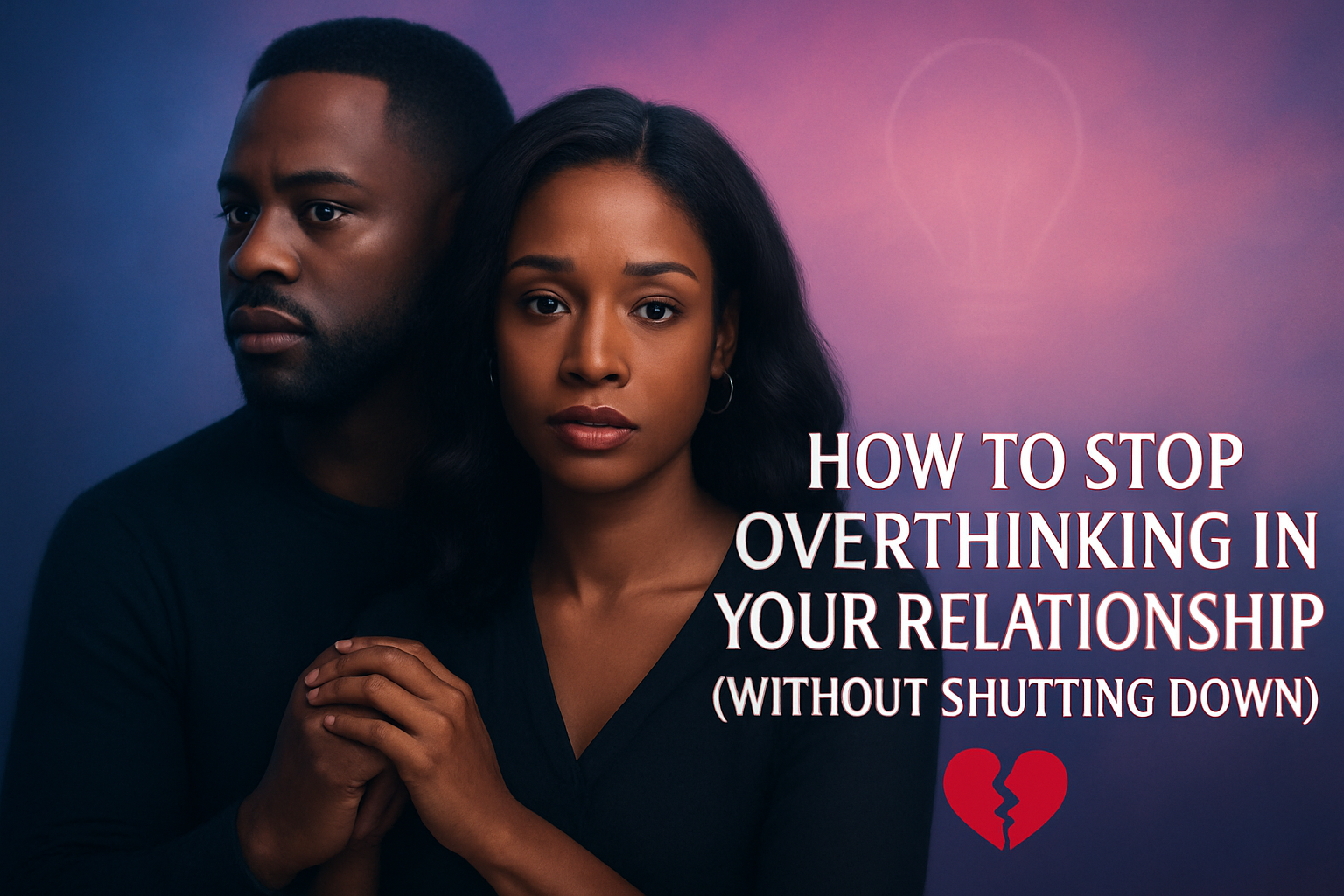
How to Stop Overthinking in Your Relationship (Without Shutting Down)
Overthinking can quietly destroy even the strongest relationships. One small comment, a delayed reply, or a change in tone can set off a spiral of “what ifs” that keeps you up all night. It’s not that you don’t love your partner — it’s that your mind is constantly trying to protect you from getting hurt.
But what happens when that protection becomes a prison?
Let’s talk about how to stop overthinking in your relationship — without shutting down emotionally, and without pushing your partner away.
What Overthinking in a Relationship Looks Like
Overthinking doesn’t always look like panic. Sometimes, it shows up as:
- Constantly replaying conversations in your head
- Needing excessive reassurance from your partner
- Reading between the lines of texts or body language
- Imagining worst-case scenarios when your partner is unavailable
- Feeling emotionally exhausted but unsure how to communicate that
If this sounds familiar, you’re not alone. Relationship anxiety is real — and manageable.
Why We Overthink in Relationships
Overthinking usually comes from fear — fear of being abandoned, betrayed, misunderstood, or unloved. Often, it’s connected to past wounds, including:
- Attachment issues from childhood
- Unhealed trauma from previous relationships
- Low self-worth or internalized beliefs like “I’m too much” or “I’ll be left”
The problem? When you’re stuck in your head, you’re not present with your partner. You might shut down, become emotionally distant, or even pick fights just to feel in control.
The Problem With Shutting Down
When you try to “deal with it yourself” by going silent or pretending you’re okay, it creates a false sense of peace — but tension still builds under the surface.
Your partner may not know what’s wrong. You may feel isolated or resentful. And your emotional needs go unmet, because no one (not even someone who loves you) can read your mind.
You deserve to feel safe expressing yourself. You deserve peace — not just in your relationship, but in your own mind.
How to Stop Overthinking Without Shutting Down
Here’s a step-by-step guide to managing your thoughts without disconnecting from your partner or yourself.
1. Name What You’re Feeling — Without Judgment
Instead of just saying “I’m overthinking,” ask:
- What emotion is underneath this?
- Am I scared, hurt, insecure, or confused?
Give yourself permission to feel that emotion — without labeling it as wrong or too much.
🧠 Pro tip: Use grounding techniques like deep breathing or journaling to slow your racing thoughts before you speak.
2. Pause the Story in Your Head
Your mind wants to fill in the blanks. But instead of believing every anxious thought, ask yourself:
- Do I have evidence for this fear?
- What else might be true?
- If my friend said this, what would I say to them?
This helps you break the loop between emotion and assumption.
3. Communicate With Curiosity, Not Accusation
Instead of saying:
“Why didn’t you call me back? I knew something was wrong!”
Try:
“Hey, I noticed I felt anxious when I didn’t hear from you. Can we talk about it?”
Use “I” statements and speak from your feelings — not your fears. It invites connection instead of defensiveness.
4. Ask Yourself What You Actually Need
Is it reassurance? Space? A hug? A check-in?
If you’re not sure, try saying:
“I’m feeling a little anxious right now. I think I need [comfort, clarity, or just your presence].”
Overthinking is often a cry for safety. The more you name and meet that need (with or without your partner), the more confident and grounded you’ll feel.
5. Stop Trying to Control the Outcome
Overthinking is a way of trying to control pain before it happens. But relationships require trust, not control.
You don’t need to have everything figured out. You just need to stay open, honest, and compassionate — with yourself and your partner.
Let go of being perfect. Practice being present.
6. Create Healthy Communication Routines
Regular check-ins can help prevent overthinking by building a foundation of trust. Consider:
- A weekly “relationship talk”
- Nightly 10-minute “emotional download” chats
- A shared journal or note app for feelings
Consistency can create security — the #1 antidote to anxiety.
Overthinking often stems from fear—fear of being misunderstood, judged, or starting a fight. But avoiding conflict only intensifies the worry. Instead of shutting down, it helps to learn how to face disagreements in a constructive way. If this sounds like you, check out our guide on healthy conflict tips for couples, where we share how to fight fair, communicate clearly, and grow stronger together—even during tough conversations.
Final Thoughts: You Are Not Too Much
You’re not too sensitive, too needy, or too emotional. You’re just human — and your thoughts are trying to protect your heart.
You don’t have to silence yourself to keep love. The right person won’t be scared of your mind — especially if you learn how to speak from your heart.
Start small. Speak gently. And remember: overthinking may visit, but it doesn’t have to stay.