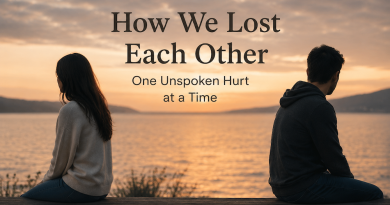

When Love Isn’t Enough: Signs You’re Losing Yourself
We’re told that love conquers all. That if you love someone enough, things will work out. But here’s a hard truth many of us learn the painful way: sometimes love isn’t enough—especially when loving someone means losing yourself in the process.
If you’ve ever found yourself emotionally drained, constantly compromising, or questioning your worth in the name of love, you’re not alone. Losing yourself in a relationship doesn’t happen overnight. It’s a slow erosion—of your boundaries, your identity, your voice.
This post explores the subtle (and not-so-subtle) signs that you’re losing yourself in a relationship, why it happens, and most importantly, how to find your way back.
The Myth of Love As a Cure-All
We grow up hearing that love should be unconditional, selfless, and even sacrificial. But that idea, while romantic, can be dangerous when it ignores one critical truth:
You cannot be fully present in a relationship if you’re absent from yourself.
When love starts to demand your silence, your needs, or your identity, it stops being healthy—and starts becoming a form of emotional self-abandonment.
Why We Lose Ourselves in Relationships
People don’t lose themselves in love because they’re weak. They do it because they’re trying to stay connected, stay safe, or stay chosen. Often, it’s rooted in:
- Fear of abandonment
- Past trauma or rejection
- Low self-esteem
- Childhood conditioning (especially if love was earned through performance or compliance)
You may unconsciously believe, “If I just give more, change more, or fix more, this love will last.”
But what ends up happening is this: the more you chase emotional safety in someone else, the further you drift from yourself.

10 Subtle Signs You’re Losing Yourself in Love
1. You Can’t Remember What You Want Anymore
You struggle to answer simple questions like:
- What makes me happy?
- What do I want to do today?
- What are my dreams?
Your preferences start to mirror your partner’s, and your needs often take a back seat to theirs.
2. You Feel Guilty for Taking Space
Even when you desperately need a break, time alone, or space to recharge, you feel guilty. You worry they’ll feel hurt, unloved, or abandoned—even if you’re just taking care of yourself.
3. You Don’t Speak Up When You’re Hurt
You avoid expressing discomfort or hurt feelings because:
- You don’t want to “ruin the mood”
- You fear being seen as too sensitive
- You worry they’ll leave or get angry
So you keep it in, pretending everything’s okay—while your resentment builds in silence.
4. You’re Always Trying to “Fix” or Earn Love
You may find yourself constantly working to prove your worth:
- Doing more
- Saying less
- Shrinking your needs
This is especially common if you grew up in a household where love was conditional or inconsistent.
5. You Tolerate What You Once Said You’d Never Accept
Your boundaries start to shift. Red flags that once would’ve been deal-breakers now feel negotiable. You rationalize behavior because you’re afraid of confrontation or loss.
6. You Apologize… Constantly
Even when you’re not at fault, you apologize:
- “Sorry I’m being annoying.”
- “Sorry, I didn’t mean to bother you.”
- “Sorry for needing that.”
This is often a sign that you feel unsafe expressing your full self.
7. You Ignore Your Intuition
Something feels off, but you brush it aside. You second-guess your gut because you don’t trust your own judgment—or you fear what listening to it might mean.
You might also be trapped in a cycle of overthinking—constantly analyzing every interaction, wondering if you’re the problem, or fearing the worst.
If this sounds familiar, read how to stop overthinking in your relationship without shutting down to regain clarity and emotional balance without disconnecting.
8. Your World Shrinks
You may find yourself pulling away from friends, hobbies, and routines that used to define you. Your partner becomes your primary source of joy, purpose, and identity—and without them, you feel lost.
9. You Feel Emotionally Exhausted
You’re emotionally tired, but not from conflict—from constantly trying to hold the relationship together. You’re overfunctioning, overgiving, and under-supported. It feels like you’re running on empty, yet still pushing forward to keep love alive.
If this resonates, don’t ignore the signs. Emotional exhaustion is real: how to spot it and recover offers practical tools to help you reconnect with yourself before burnout takes over.
10. You Feel Like a Stranger to Yourself
The clearest sign of all: when you look in the mirror, you don’t recognize the person staring back. You wonder, “Where did I go?”
Why This Matters
Losing yourself doesn’t just affect your happiness. It affects:
- Your self-worth
- Your ability to make decisions
- Your mental health
- The quality of your relationship
Because here’s the thing: real, sustainable love doesn’t require self-erasure. Healthy love allows you to keep your identity and your intimacy.
If this resonates, you’re not broken. But it’s time to come home to yourself.
How to Reclaim Yourself Without Losing the Relationship
Reclaiming your identity doesn’t always mean walking away. Sometimes, it means walking back toward yourself—with clarity and courage. Here’s how:
1. Get Quiet and Reflect
Ask yourself:
- When did I start feeling disconnected from myself?
- What parts of me have I hidden or silenced?
- What am I afraid will happen if I show up fully?
Journaling can help you untangle the emotional knots that have kept you stuck. You might also like our post on
2. Reconnect With Your Desires
Start small:
- Revisit hobbies or music you used to love
- Make time for solitude and self-care
- Say “yes” to what excites you—even if your partner isn’t involved
This helps you remember: you are a whole person, not just someone’s partner.
3. Communicate Your Needs
Use “I” statements to express what you need without blame:
- “I’ve been feeling a little lost and want to reconnect with myself.”
- “I’d love more space to pursue my own interests.”
A healthy partner won’t punish you for having a voice—they’ll respect it.
4. Set Gentle But Clear Boundaries
Boundaries are not walls. They’re doors with locks you control. You can say:
- “I need a night to myself once a week.”
- “I’m working on not apologizing for everything.”
If someone truly loves you, they won’t make you choose between the relationship and your well-being.
5. Get Support
You don’t have to figure this out alone. Therapy, coaching, or even support groups can offer guidance as you rebuild your relationship with yourself.
For couples, learning how to engage in healthy conflict is key. Read our guide on The Right Way to Fight: Healthy Conflict Tips for Couples for tools that help both partners feel seen and safe.
Final Thoughts
Love is powerful—but it should never cost you your voice, your peace, or your identity. When love starts to feel like a battle for approval, a place where you disappear to be accepted, it’s not truly love. At least not the kind that heals.
You deserve a love where you can be both deeply connected and fully yourself.
So if you’ve been wondering whether love is enough, consider this:
Love is only enough when it doesn’t ask you to disappear.
Come home to yourself. The right people will meet you there.
Additional Resources
When love isn’t enough: Love, loss, and the shadow of addiction