
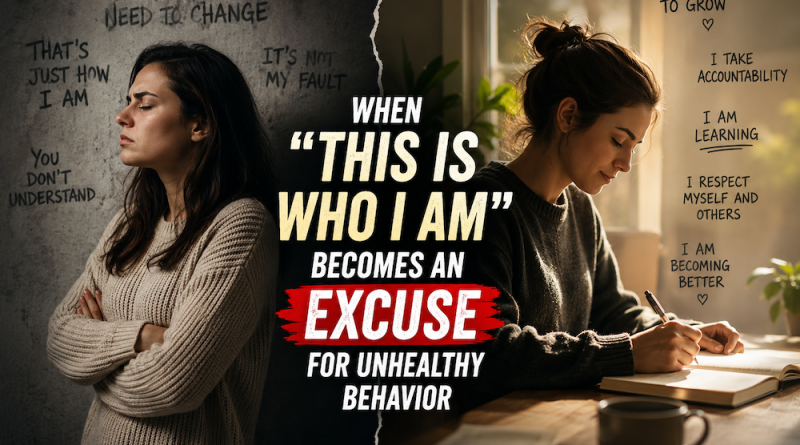
When “This Is Who I Am” Becomes an Excuse for Unhealthy Behavior
Self-acceptance is important. In fact, learning to embrace yourself can improve confidence, emotion al health, and relationships. It allows people to stop pretending and start living more honestly.
However, there is a difference between accepting yourself and refusing to grow.
Many people use the phrase “This is who I am” as a defense whenever someone points out unhealthy behavior. Instead of reflecting on their actions, they immediately become defensive. As a result, accountability disappears while harmful patterns continue.
Over time, this mindset can quietly damage relationships, emotional safety, and personal growth.
Of course, nobody is perfect. Everyone has flaws, emotional wounds, and unhealthy habits they are still working through. Nevertheless, emotional maturity requires the willingness to grow instead of using personality as an excuse to remain harmful.
Sometimes, the most dangerous behaviors are not the loud ones people easily notice. Instead, they are the patterns constantly defended with:
“That’s just how I am.”
What Does “This Is Who I Am” Really Mean?
In some situations, the statement reflects healthy confidence. For example, a person may use it when choosing authenticity instead of pretending to satisfy everyone else. Similarly, it can mean embracing certain personality traits without shame.
That kind of self-acceptance is healthy.
Unfortunately, the phrase often appears after someone is confronted about hurtful behavior.
Examples include:
- “I have a bad temper. That’s just who I am.”
- “I don’t communicate well.”
- “I shut people out when I’m upset.”
- “I’m naturally rude sometimes.”
- “I say hurtful things when angry.”
- “I’ve always been emotionally unavailable.”
Although honesty is important, self-awareness should not stop at identification. Emotional growth matters too.
Recognizing a problem without trying to improve it eventually becomes emotional avoidance.
Self-Acceptance Should Not Eliminate Accountability
True self-acceptance does not mean believing you never need growth. In reality, emotionally healthy people understand that self-love and accountability can exist together. While you can appreciate who you are, you should also recognize behaviors that need healing.
Growth is not self-hatred. Instead, it reflects emotional maturity and self-awareness. Moreover, changing harmful habits does not make you fake—it shows you care about how your actions affect others.
Unfortunately, some people confuse accountability with rejection. As a result, they become defensive whenever someone points out a harmful pattern. Rather than reflecting, they immediately respond with statements like:
- “You’re trying to change me.”
- “Nobody accepts me for who I am.”
- “This is just my personality.”
However, emotional maturity requires honesty. That means being willing to ask difficult questions:
- Am I hurting people?
- Do I keep repeating unhealthy patterns?
- Am I using my personality as an excuse to avoid growth?
Although those questions may feel uncomfortable, they are often the beginning of healing.
Unhealthy Behaviors People Often Excuse
1. Anger and Emotional Outbursts
Some people normalize shouting, insults, or aggressive reactions by saying:
“That’s just how I react.”
While emotions are natural, emotional harm should never become normal.
Everyone experiences anger. However, emotionally healthy people learn how to regulate emotions instead of expecting others to survive emotional explosions. Even if childhood trauma or stress explains someone’s reactions, repeated emotional harm still damages relationships.
Therefore, healing requires responsibility.
2. Poor Communication
Communication problems are another behavior many people excuse.
For instance, someone may say:
- “I’m not good at expressing myself.”
- “I hate talking about feelings.”
- “That’s just how I am.”
Unfortunately, avoiding communication creates confusion and emotional distance. Over time, silence can become just as damaging as harsh words.
Healthy relationships depend on emotional openness. Because of this, communication should be treated as a skill to improve rather than a weakness to defend.
3. Toxic Honesty
Some people describe themselves as “brutally honest.” However, honesty without empathy can easily become emotional cruelty.
Instead of communicating with kindness, they say hurtful things and then defend themselves with:
“I’m just being real.”
Certainly, honesty matters. Nevertheless, truth does not need to humiliate people in order to be valid.
Emotionally mature people understand the difference between honesty that helps and honesty that wounds.
4. Emotional Unavailability
Another unhealthy pattern people often excuse is emotional distance.
Some individuals avoid vulnerability, affection, or emotional connection while expecting relationships to survive without intimacy. Whenever concerns are raised, they respond with statements like:
- “I’ve always been this way.”
- “I’m not emotional.”
- “I don’t know how to open up.”
Although emotional walls may feel protective, they often create loneliness for both people involved.
In many cases, emotional unavailability is connected to deeper fears, attachment wounds, or painful childhood experiences. If this sounds familiar, you may also enjoy reading “Attachment Styles in Love: How They Shape Your Relationships.”
Why People Hide Behind “This Is Who I Am”
Fear of Change
Growth can feel uncomfortable because it requires emotional honesty and accountability. Consequently, many people choose defensiveness instead of reflection.
After all, saying:
“That’s just how I am.”
Feels easier than admitting:
“I need healing.”
Still, avoiding growth does not protect relationships. Instead, it slowly damages them.
Childhood Conditioning
Childhood experiences can also shape unhealthy emotional patterns.
For example, someone raised around shouting, criticism, emotional neglect, or manipulation may normalize those behaviors without realizing it. As a result, they repeat unhealthy patterns in adulthood because those habits feel familiar.
However, familiar does not always mean healthy.
Healing often begins when people stop normalizing what once hurt them. If you are learning how childhood experiences affect your emotional life, read “Reparenting Yourself: How to Heal the Inner Critic.”
Fear of Vulnerability
Additionally, unhealthy behaviors sometimes hide deeper emotional pain.
For instance:
- Anger may hide sadness
- Emotional distance may hide fear of rejection
- Control may hide insecurity
- Avoidance may hide fear of abandonment
Because vulnerability feels risky, some people use “This is who I am” as emotional protection rather than genuine authenticity.
The Difference Between Authenticity and Emotional Avoidance
Authenticity means being honest about who you are while remaining open to growth.
Emotional avoidance, on the other hand, happens when someone uses identity to escape accountability.
Healthy authenticity says:
“This is something I struggle with, but I’m trying to grow.”
Emotional avoidance says:
“This is just who I am. Deal with it.”
One mindset encourages healing. Meanwhile, the other blocks emotional maturity.
Healthy Relationships Require Growth
No relationship can survive without growth. Whether in friendships, marriages, or family relationships, emotional maturity plays an important role in maintaining trust and emotional safety.
Over time, people evolve through accountability, communication, and healing. For this reason, the strongest relationships are rarely between perfect people. Instead, they are built by individuals willing to reflect, apologize, and improve unhealthy patterns.
In many cases, growth also involves learning healthier boundaries with family dynamics and emotional pressure. For example, unresolved stress connected to financial responsibility can slowly affect mental health and relationships. If you relate to this struggle, read “When Helping Family Hurts: Can Financial Support Limit Your Success?”
Likewise, many couples experience emotional tension because of difficult extended-family relationships. Rather than allowing conflict to steal their peace, emotionally healthy people learn how to communicate boundaries with wisdom and respect. You may also enjoy “Navigating In-Laws Without Losing Your Peace.”
Additionally, people who constantly seek approval sometimes tolerate unhealthy behavior because they fear rejection. If that resonates with you, consider reading “People-Pleasing in Relationships: Why It Happens and How to Stop.”
How to Know If You’re Using “This Is Who I Am” as a Defense

Self-awareness requires honesty. Therefore, ask yourself:
- Do I become defensive when people express hurt?
- Do I repeat the same unhealthy patterns?
- Do I expect others to adjust while refusing to change anything?
- Have multiple people complained about the same behavior?
- Do I confuse accountability with rejection?
Although self-reflection can feel uncomfortable, it creates room for emotional growth.
Healing Does Not Mean Becoming Someone Else
One reason people resist growth is fear. Many worry that changing unhealthy habits will erase their personality.
Fortunately, healing does not destroy identity. Instead, it strengthens the healthiest parts of who you are.
You can:
- Be honest without becoming cruel
- Be confident without arrogance
- Be emotional without becoming destructive
- Set boundaries without becoming cold
- Be authentic while still growing
Ultimately, growth refines identity rather than removing it.
Final Thoughts
There is beauty in accepting yourself. However, self-acceptance becomes unhealthy when it turns into resistance against growth.
The phrase “This is who I am” should never become permission to stay emotionally harmful, emotionally unavailable, or unwilling to heal.
Everyone has flaws. Moreover, everyone has emotional wounds they are still learning to manage. Yet emotionally healthy people do not use those wounds as permanent excuses.
Instead, they reflect.
They apologize.
They heal.
And most importantly, they grow.
Sometimes, the strongest thing a person can say is not:
“This is who I am.”
But:
“I know I need to grow.”
Additional Resources
Are you using your personality type as an excuse for poor behavior?