
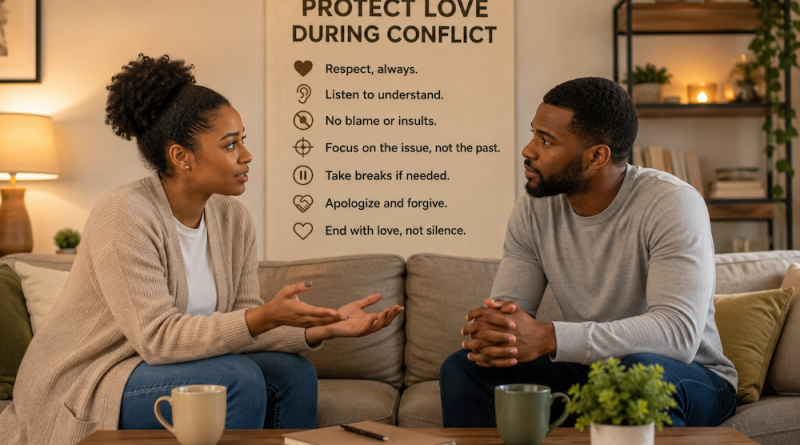
Rules That Protect Love During Conflict: How to Disagree Without Damaging Your Relationship
Every Relationship Faces Conflict
No matter how much two people love each other, disagreements are inevitable. Different personalities, life experiences, expectations, and communication styles naturally lead to conflict from time to time. However, arguments don’t have to weaken a relationship. When handled well, they can actually strengthen trust, deepen understanding, and bring couples closer together.
Unfortunately, many people assume that conflict is a sign their relationship is failing. In reality, it’s often the way couples respond to disagreements—not the disagreements themselves—that determines whether love grows or slowly fades.
Healthy relationships aren’t built on avoiding difficult conversations. Instead, they are built on learning how to protect each other while working through those conversations. That’s why understanding the rules that protect love during conflict is one of the most valuable relationship skills you can develop.
If you’ve ever walked away from an argument feeling hurt, misunderstood, or emotionally distant from your partner, you’re certainly not alone. The good news is that conflict doesn’t have to leave lasting emotional wounds. With healthier communication habits, disagreements can become opportunities for growth rather than reasons for separation.
Let’s explore the rules that help couples disagree with respect while protecting the love they’ve worked so hard to build.
Why Conflict Isn’t the Real Problem
Many people believe that a healthy couple never argues. However, every lasting relationship experiences moments of disagreement. Conflict simply means that two people have different opinions, needs, expectations, or emotions.
The real danger begins when disagreements become filled with criticism, disrespect, or emotional distance. For example, constant blame, personal attacks, defensiveness, contempt, and silent treatment slowly erode trust over time.
Healthy conflict sends a completely different message:
“We’re on the same team, even though we see this situation differently.”
When both partners remember they’re working toward the same goal, finding solutions becomes much easier.
1. Remember You’re Solving a Problem—Not Fighting an Enemy
During an argument, it’s surprisingly easy to see your partner as the opponent. As a result, conversations become battles where each person tries to prove they’re right.
A healthier mindset is much simpler:
You and your partner versus the problem.
Rather than asking, “How do I win this argument?” ask yourself:
- What are we really trying to solve?
- What does my partner need right now?
- How can we find a solution together?
Couples who approach conflict as teammates usually resolve disagreements with less resentment and greater understanding.
2. Focus on the Behavior, Not the Person
Words spoken during anger often leave lasting scars. That’s why attacking someone’s character rarely solves the actual problem.
Avoid saying things like:
- “You’re selfish.”
- “You’re impossible.”
- “You’re lazy.”
- “You never care.”
Instead, describe the specific behavior that hurt you.
For example:
- “I felt disappointed when our plans changed without notice.”
- “I needed more communication today.”
Specific feedback encourages change, whereas personal attacks usually create shame and defensiveness.
3. Listen to Understand Before You Respond
Most people spend more time preparing their reply than truly listening.
Instead, make understanding your first priority.
Allow your partner to finish speaking before explaining your own perspective. Then ask thoughtful questions such as:
- “Can you help me understand?”
- “What made you feel that way?”
- “Tell me more about what happened.”
Feeling heard often reduces tension much faster than trying to prove a point.
4. Protect Respect, Even When Emotions Run High
Feeling angry isn’t unhealthy. However, expressing anger through insults or humiliation damages emotional safety.
Avoid behaviors such as:
- Name-calling
- Mocking
- Threatening
- Belittling
- Bringing up painful memories just to hurt your partner
Although emotions may feel intense, respect should never disappear. Couples who protect respect during conflict also protect intimacy.
5. Stay Focused on Today’s Problem
Some disagreements quickly become a long list of past mistakes.
Before long, today’s issue disappears beneath months—or even years—of unresolved frustration.
Instead, concentrate on the current disagreement. If an older issue still needs attention, schedule another conversation for another day.
Keeping one discussion focused on one problem makes solutions much easier to find.
6. Separate Intent From Impact
Sometimes your partner didn’t mean to hurt you.
Even so, the pain you experienced is still real.
Rather than saying,
“That’s not what I meant.”
Try saying,
“I understand why that hurt you.”
Acknowledging someone’s feelings doesn’t automatically mean you intended harm. Instead, it demonstrates empathy and emotional maturity.
When people feel understood, they’re usually much more willing to work toward a solution.
7. Take a Break Before Words Become Regrets

Strong emotions can cloud good judgment. Consequently, people sometimes say things they wish they could take back.
Healthy couples recognize when emotions are becoming overwhelming.
Instead of continuing an argument that’s escalating, try saying:
“I need about twenty minutes to calm down so we can continue this conversation respectfully.”
The important part is returning to the conversation after the break. Taking time to cool down is healthy; avoiding the issue altogether is not.
8. Avoid Using Absolute Words
Words like “always” and “never” can make your partner feel attacked because they exaggerate the situation. As a result, the conversation often shifts from solving the problem to defending against the accusation.
Instead of saying:
“You never help around the house.”
Try saying:
“I’ve been feeling overwhelmed lately, and I’d appreciate more help.”
Likewise, replacing sweeping statements with specific examples makes it easier for your partner to understand your concerns without becoming defensive.
9. Assume Positive Intent Until You Know Otherwise
Not every mistake is a sign that your partner doesn’t care. Sometimes people are simply stressed, tired, distracted, or dealing with pressures you may not fully understand.
Before jumping to conclusions, ask questions with genuine curiosity.
For example:
- “Can you help me understand what happened?”
- “Was something bothering you today?”
Giving your partner the benefit of the doubt doesn’t mean ignoring hurtful behavior. Rather, it creates room for honest conversations instead of unnecessary conflict.
10. Apologize Without Making Excuses
A sincere apology has the power to repair emotional wounds. However, adding excuses often weakens its impact.
For example, avoid saying:
“I’m sorry, but you made me angry.”
Instead, try saying:
“I’m sorry for the way I spoke to you. I understand that my words hurt you, and I’ll work on communicating better.”
Taking responsibility demonstrates maturity and shows your partner that rebuilding trust matters more than protecting your ego.
11. Stop Trying to Win the Argument
Many couples unknowingly turn disagreements into competitions. Unfortunately, winning the argument often means losing emotional closeness.
Instead of asking,
“How do I prove I’m right?”
Ask,
- “What’s best for our relationship?”
- “How can we solve this together?”
- “What solution respects both of our needs?”
Healthy relationships aren’t about defeating each other. Instead, they’re built on teamwork, compromise, and mutual respect.
12. Repair the Relationship After Every Conflict
Even the healthiest couples experience disagreements. The difference is that they intentionally reconnect afterward.
Repair can be as simple as:
- Saying, “I’m sorry.”
- Offering a hug.
- Holding hands.
- Sharing a meal together.
- Smiling again.
- Checking in emotionally.
These small moments communicate an important message:
“We’re okay, and we’ll get through this together.”
In fact, consistent repair strengthens emotional security and prevents resentment from quietly building over time.
13. Validate Feelings Without Needing to Agree
Validation doesn’t mean admitting you’re wrong. Instead, it means acknowledging that your partner’s emotions are real and worthy of respect.
For example, you might say:
“I understand why that situation made you feel disappointed.”
Even if you remember events differently, recognizing your partner’s feelings helps reduce defensiveness and encourages healthier communication.
As a result, both people feel safer expressing themselves honestly.
14. Protect Your Relationship’s Privacy
Although trusted advice can be helpful, not every disagreement should become a public discussion.
Constantly involving friends, relatives, or social media in your conflicts can damage trust between partners.
Whenever possible, work through disagreements privately. If additional support is needed, choose someone who is wise, trustworthy, and committed to helping both of you rather than taking sides.
Protecting your relationship’s private moments builds emotional safety and strengthens mutual trust.
15. End Difficult Conversations With Reassurance
Arguments can leave both partners feeling uncertain about the future of the relationship. Therefore, ending a conversation with reassurance can make a significant difference.
Simple statements such as:
- “I love you.”
- “We’ll figure this out together.”
- “I’m committed to us.”
- “Thank you for talking this through with me.”
help restore emotional security after conflict.
Although the disagreement may not be fully resolved yet, reassurance reminds both people that the relationship remains a priority.
Common Mistakes That Damage Love During Conflict
Even couples with the best intentions sometimes develop unhealthy habits. Fortunately, recognizing these patterns is the first step toward changing them.
Watch out for behaviors such as:
- Interrupting before your partner finishes speaking.
- Refusing to apologize.
- Giving the silent treatment as punishment.
- Bringing unrelated problems into the discussion.
- Trying to prove who’s right instead of finding a solution.
- Threatening to end the relationship during every disagreement.
- Assuming motives instead of asking questions.
- Ignoring or dismissing your partner’s emotions.
Replacing these habits with patience, empathy, and respectful communication creates a much healthier foundation for lasting love.
Healthy Conflict Can Strengthen Your Relationship
Many people believe that happy couples never argue. In reality, every healthy relationship experiences conflict from time to time. The difference is that emotionally healthy couples know how to handle disagreements without damaging their connection.
Instead of allowing conflict to create emotional distance, they use it as an opportunity to grow in understanding, strengthen trust, and improve communication. Over time, these positive habits build a relationship that feels safer, more secure, and more resilient.
Healthy couples don’t avoid difficult conversations. Rather, they choose to:
- Stay respectful during disagreements.
- Listen before reacting.
- Protect each other’s emotional safety.
- Repair the relationship after conflict.
- Choose understanding instead of pride.
As these habits become part of daily life, arguments become less about winning and more about strengthening the relationship.
Build Better Conflict Skills One Conversation at a Time
Learning healthier communication doesn’t happen overnight. However, every respectful conversation is another step toward building a stronger relationship.
If you often find yourself reacting emotionally during disagreements, developing greater self-awareness can completely change the way you communicate. Before trying to change your partner, it’s worth understanding your own emotional triggers, communication patterns, and reactions. You may find our article, Why Self-Awareness Is the Missing Piece in Every Healthy Relationship, especially helpful as it explains how personal growth creates healthier relationships from the inside out.
Likewise, knowing how to argue matters just as much as knowing what to say. If you’d like practical strategies for handling disagreements with kindness and respect, don’t miss The Right Way to Fight: Healthy Conflict Tips for Couples. It offers simple techniques that can help you resolve conflict while protecting trust and emotional intimacy.
Final Thoughts
Every relationship will experience moments of disagreement. Nevertheless, conflict doesn’t have to become a threat to love.
When couples choose patience over pride, empathy over blame, and understanding over criticism, they create an environment where love can continue to grow—even during difficult conversations.
Remember that strong relationships aren’t built because two people never disagree. Instead, they’re built because both partners are willing to protect each other while working through those disagreements.
By following these rules that protect love during conflict, you’ll create healthier communication, rebuild trust more easily, and strengthen your emotional connection over time.
The goal isn’t to win every argument.
The goal is to protect the relationship while finding a solution together.
When love remains the priority, even conflict can become an opportunity to grow closer than ever before.