

Why Men Struggle to Ask for Emotional Help
Introduction
When we think about strength, many people imagine men—stoic, resilient, and unshaken by life’s storms. But behind that image, countless men are silently struggling with emotional battles they feel unable to share. From workplace stress to relationship challenges and even deep loneliness, men often carry their burdens alone.
Why? Why do men struggle to ask for emotional help even when they desperately need it? This isn’t just a personal issue; it’s a cultural and societal one. In this article, we’ll explore the roots of this struggle, its impact on men’s well-being and relationships, and how we can encourage healthier conversations around men’s emotional lives.
The Cultural Script of Masculinity
From an early age, boys often hear phrases like:
- “Boys don’t cry.”
- “Man up.”
- “Be strong.”
These messages create a script of masculinity where emotional expression is equated with weakness. By the time these boys grow into men, many have internalized the idea that showing vulnerability makes them less of a man.
This cultural conditioning explains why men hesitate to seek therapy, confide in friends, or even share their struggles with a partner. Instead, they’re more likely to suppress their feelings—only for them to resurface as anger, irritability, or even health issues.
The Fear of Judgment and Rejection
Many men worry that opening up about their feelings will lead to judgment, ridicule, or even rejection. A man may think:
- “If I tell my partner I feel anxious, she’ll see me as weak.”
- “If I admit I’m depressed, my friends won’t respect me.”
- “If I tell my boss I’m overwhelmed, I’ll be seen as incapable.”
This fear of being misunderstood or seen as “less than” keeps many men trapped in silence, despite their need for support.
The Impact of Silence on Men’s Mental Health
Not asking for help comes with real consequences. Research has shown that men are less likely to be diagnosed with depression—not because they don’t experience it, but because they don’t seek help. Instead, their pain often shows up in other ways:
- Risk-taking behaviors (substance abuse, reckless driving, gambling)
- Physical symptoms (chest tightness, headaches, fatigue)
- Anger outbursts and emotional distance in relationships
The silence can be deadly. Men account for a disproportionate number of suicide deaths worldwide, often because they feel they have no safe outlet for their struggles.
How This Struggle Affects Relationships
Men’s inability to ask for emotional help doesn’t just affect them—it also impacts their relationships. Partners may feel shut out, confused, or even unloved when their significant other withdraws emotionally. Over time, this creates loneliness on both sides of the relationship.
This is why fostering emotional safety in relationships is so important. When men feel they can open up without being shamed, they’re more likely to share what’s really going on inside. If you’d like to explore this further, read How to Spot Emotional Safety in the First Months of Dating.
Breaking the Cycle: Why Vulnerability is Strength
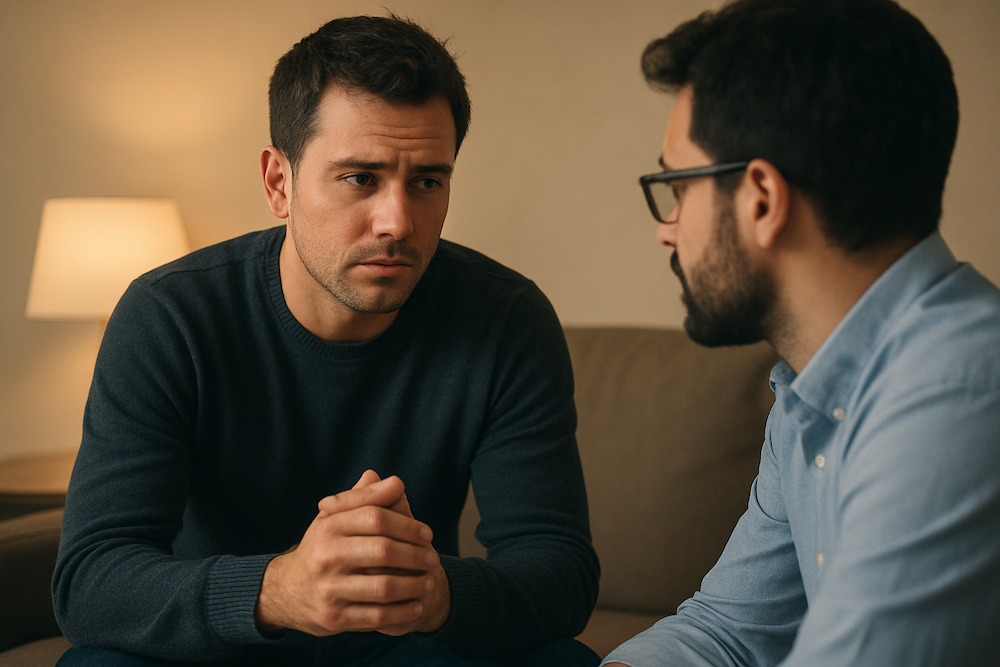
Contrary to popular belief, asking for help is not a weakness—it’s one of the strongest things a man can do. Vulnerability builds trust, deepens relationships, and promotes mental well-being.
Men who open up to their loved ones often discover:
- Their relationships become more intimate and supportive.
- They experience less stress because they’re not carrying the weight alone.
- They model healthy behavior for their sons, nephews, or younger men around them.
Practical Ways Men Can Start Asking for Help
- Start small – Sharing one struggle with a close friend or partner is a powerful first step.
- Reframe therapy – Think of counseling as “mental fitness,” just like going to the gym for your body.
- Find supportive spaces – Men’s groups, faith communities, or online forums can provide safe outlets.
- Practice self-reflection – Journaling or even recording thoughts on your phone can help men process emotions before sharing them.
- Challenge the old script – Every time a man allows himself to cry, express stress, or admit pain, he redefines what strength truly means.
What Partners, Friends, and Families Can Do
If you love a man who struggles to ask for help, you can play a role in making emotional openness easier for him:
- Normalize emotions: Don’t tease or shame him for crying or expressing worry.
- Ask gently: Instead of “What’s wrong with you?” try “How are you holding up these days?”
- Create safety: Let him know you won’t use his vulnerability against him.
- Encourage support: Suggest therapy or support groups without pressuring him.
The Path Toward Healing
Encouraging men to seek emotional help isn’t about making them “less masculine”—it’s about helping them live healthier, fuller lives. Real strength isn’t about silence or stoicism; it’s about courage, honesty, and connection.
When men begin to rewrite the script, they not only heal themselves but also create stronger families and communities. And perhaps most importantly, they teach the next generation that emotions are human, not a weakness.
If you’ve ever found yourself hiding your struggles, remember: asking for help is a sign of wisdom, not weakness.
Conclusion
Men struggle to ask for emotional help because of cultural expectations, fear of judgment, and years of conditioning. But silence only deepens the pain. By opening up, men not only find healing but also give others permission to do the same.
The journey toward vulnerability may feel uncomfortable at first, but it’s worth it. True strength lies not in enduring alone but in having the courage to say: “I need help.”
For more on relationship struggles, you might also want to read The Loneliness No One Talks About in Marriage