
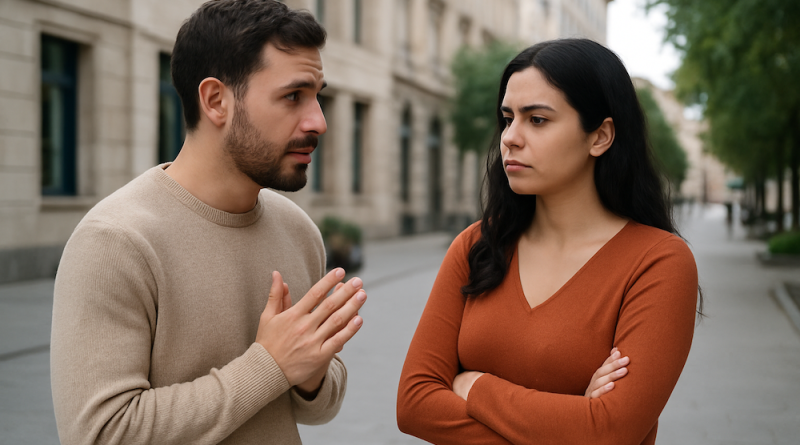
The Right Way to Apologize in a Relationship: A Guide to Healing, Not Just Saying “Sorry”
We all mess up sometimes. It’s part of being human. Whether it’s forgetting something important, saying something hurtful in the heat of the moment, or pulling away emotionally, mistakes in relationships are inevitable. But what truly matters is how we repair the damage. And that’s where a real, heartfelt apology comes in.
Apologizing the right way isn’t just about saying “I’m sorry.” It’s about acknowledging the hurt, taking full responsibility, and committing to change. Done well, an apology can become a powerful bridge to deeper intimacy and trust. Done poorly—or avoided altogether—it can create distance, resentment, and emotional disconnection.
In this post, we’ll walk through what makes an apology meaningful, the common mistakes to avoid, and how to apologize in a way that nurtures healing and connection.
Why Apologies Matter in Relationships
A genuine apology communicates that:
- You value your partner’s feelings.
- You recognize your impact on them.
- You’re willing to own your part in the conflict.
- You want to restore emotional safety.
Without an apology, hurt tends to linger. It can silently grow into walls of defensiveness, bitterness, or emotional withdrawal. But with the right kind of apology, you’re saying: “You matter to me more than my ego. Let’s make things right.”
Signs of a Meaningful Apology
Here’s what separates a healing apology from a shallow one:
1. Acknowledgment of Harm
A real apology begins with seeing clearly what you did and how it affected your partner. This might sound like:
“I realize that what I said last night was hurtful, and it made you feel dismissed.”
2. No Defensiveness or Justification
“I’m sorry you feel that way” or “I wouldn’t have done that if you hadn’t…” are not apologies—they’re blame-shifting. A sincere apology avoids making excuses.
3. Taking Full Responsibility
Instead of explaining away your actions, take ownership. Try:
“I was wrong to raise my voice. I lost control, and it wasn’t fair to you.”
4. Empathy and Validation
Let your partner know that you understand their pain. You might say:
“I can see how that made you feel unimportant. That wasn’t my intention, but I get how it hurt.”
5. Commitment to Change
Without action, words mean little. A real apology ends with a plan for growth:
“I’m going to work on my tone when we argue. You deserve to feel safe with me.”
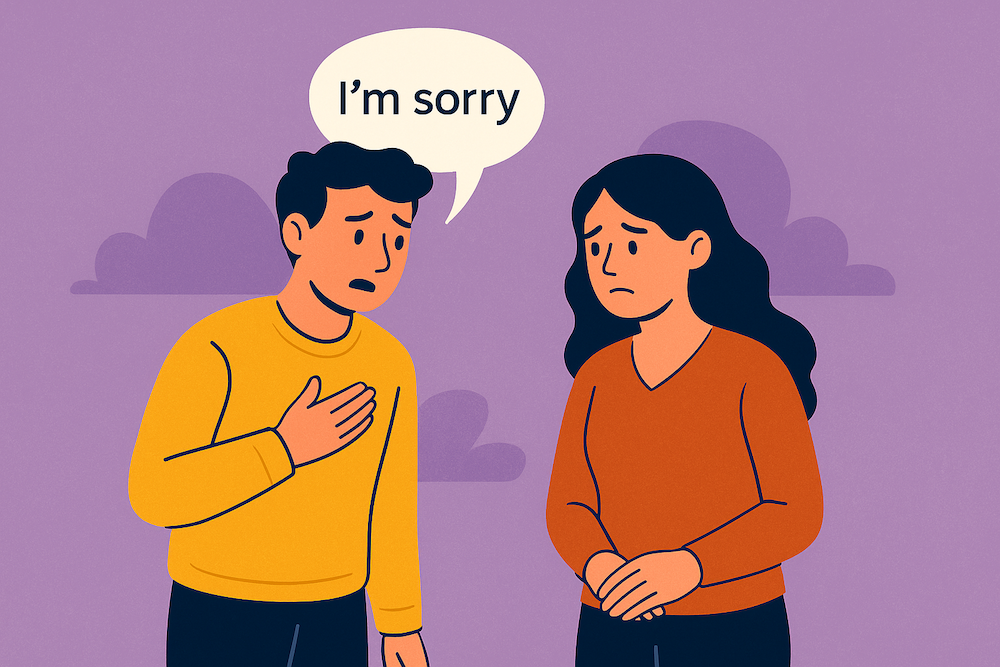
Steps to Apologize the Right Way
Let’s break down a healthy apology into clear, practical steps you can use:
Step 1: Reflect Before You Speak
Before jumping in, take a moment to calm down and reflect on what happened. Ask yourself:
- What exactly did I do or say?
- Why did it hurt my partner?
- Was I reacting out of fear, stress, or insecurity?
This helps you approach the conversation with humility, not defensiveness.
Step 2: Initiate the Apology
Don’t wait for the perfect moment. Reach out. You could say:
“Hey, can we talk? I’ve been thinking about what happened, and I want to make things right.”
That initiative alone shows emotional maturity.
Step 3: Clearly Say “I’m Sorry”—and Mean It
Be direct. Avoid vague or passive language. Say something like:
“I’m really sorry for forgetting our anniversary. That was careless of me.”
Notice how specific it is. It’s not just “Sorry”—it’s what you’re sorry for.
Step 4: Acknowledge Their Pain
This part is crucial. Name their experience:
“I know that must’ve made you feel unimportant and disappointed. I hate that I made you feel that way.”
Even if you didn’t intend to cause harm, validating their pain helps them feel seen and respected.
Step 5: Own Your Behavior Without Blame
This is where most people struggle. Resist the urge to explain it all away. For example:
- Not this: “I was just stressed and you were nagging.”
- But this: “I snapped at you, and that was wrong. I should’ve told you I was overwhelmed instead of taking it out on you.”
Step 6: Make Amends
Ask what they need from you to move forward. Offer repair:
“Would it help if I set reminders for important dates?”
“I want to listen more deeply when you’re upset. Can we talk about how I can show up better?”
Step 7: Commit to Change
Say how you’ll work on the issue—and follow through. Change is the true apology.
What Not to Do When Apologizing
Let’s talk about the pitfalls that can turn an apology into another source of conflict:
❌ Making it about yourself
Saying “I feel terrible” over and over shifts the focus to you. Instead, focus on their experience.
❌ Over-apologizing
“I’m sorry, I’m the worst, you must hate me…” creates guilt rather than healing. Apologize sincerely, then move forward constructively.
❌ Waiting too long
Apologies lose impact when delayed. The sooner you acknowledge hurt, the better.
❌ Expecting immediate forgiveness
Healing takes time. Apologize without pressuring your partner to instantly “get over it.”
Apologizing Isn’t a Sign of Weakness
Some people avoid apologizing because they fear it makes them look weak or “guilty.” But in truth, it takes strength and emotional intelligence to own your actions. A mature apology builds credibility—it shows your partner they can trust you to face difficult moments with integrity.
If you’re often the one apologizing in the relationship, it’s okay to reflect on boundaries and patterns too. Healthy apologies go both ways—they don’t mean you’re always the problem, just that you’re willing to grow.
The Role of Forgiveness After Apology
Once an apology is made, the healing journey isn’t over. Forgiveness takes time and communication. Sometimes, you may need to revisit the conversation, especially if the hurt was deep.
If you’re the one receiving the apology, you don’t have to pretend it never happened. But you can choose to move forward in small steps—especially when your partner is showing real change.
Related read: Emotional Safety: The Real Secret to Lasting Love
When Apologies Are Repeated—But Nothing Changes
If your partner apologizes often but keeps repeating the same behavior, it may be time for a deeper conversation. An apology without action becomes manipulation.
Ask:
- What do you need from me to help this change?
- Do we need outside support, like couples therapy?
Remember: repetition without change is not love—it’s avoidance.
How Apologies Strengthen Intimacy
Think of a relationship like a house. Mistakes are like cracks in the walls. Apologies are how we patch them up and reinforce the foundation.
When both partners are willing to apologize sincerely, the relationship becomes a safe space where:
- Conflict doesn’t mean disconnection.
- Vulnerability is respected.
- Love becomes stronger through challenges.
In short, apology is a form of love in action.
Related read: How to Be Vulnerable Without Feeling Weak in Love
Final Thoughts: Don’t Just Say Sorry—Be Sorry and Show It
Saying “I’m sorry” is easy. But a real apology is more than a sentence—it’s a process of reflection, empathy, ownership, and change.
Whether it’s a small disagreement or a big betrayal, the way you apologize can either open the door to healing or shut your partner out. When done with love and intention, it becomes a powerful act of intimacy.
So next time you mess up (because we all do), take a breath. Reach out. Speak from the heart. And remember, the right way to apologize doesn’t just heal a moment—it strengthens the bond for the long haul.
Additional Resources
Master the Art of Apologizing Effectively in Relationships: A Guide to Building Stronger Bonds
The Art of Apology: Healing Relationships and Moving Forward