
How Social Media Is Quietly Ruining Real Relationships
Introduction: When “Connection” Becomes Disconnection
We live in the most connected generation in human history — yet many of us feel lonelier than ever.
Social media promised to bring us closer, to help us share our lives and stay in touch with those we love. But somewhere along the line, the likes, comments, and DMs started replacing genuine conversations, hugs, and laughter.
Today, social media has quietly woven itself into our relationships — influencing how we communicate, how we perceive love, and even how we measure self-worth. The saddest part? Most people don’t realize how deeply it’s affecting their connections until the damage has already been done.
1. The Illusion of Connection
At first glance, social media seems like a wonderful way to connect — you can text, share photos, and even video call in seconds. But here’s the catch: digital connection doesn’t always equal emotional intimacy.
You might be scrolling through your partner’s Instagram stories or liking their posts, thinking you’re keeping in touch. But these micro-interactions often replace real conversations.
Before long, relationships become surface-level — filled with emojis and “hearts” instead of eye contact and vulnerable talks.
A 2023 study by Pew Research Center found that 51% of adults say social media has made their relationships more superficial.
And it’s true — many couples now spend more time engaging online than they do looking into each other’s eyes.
Real connection requires presence. And presence doesn’t exist when your attention is split between your partner and your phone.
2. The Comparison Trap
One of the most toxic side effects of social media is constant comparison.
You might be happy with your relationship until you scroll past a couple who just went on a luxurious vacation, posted a perfect anniversary photo, or shared matching outfits. Suddenly, you start questioning your own relationship:
“Why don’t we look that happy?”
“Why doesn’t my partner do things like that?”
But here’s the truth — social media shows highlight reels, not reality.
Behind those smiling photos might be arguments, financial struggles, or emotional distance. Yet, the endless stream of “perfect” couples online can slowly erode your contentment with your own partner.
When comparison takes root, it breeds resentment, insecurity, and dissatisfaction — all silent killers of love.
Want to explore this topic deeper? You might enjoy reading my related post:
👉 The Hidden Pain of Sibling Rivalry in Adulthood — it shows how comparison and silent competition can quietly damage even our closest bonds.
3. Privacy Is Losing Its Value
Remember when relationships felt sacred? When intimate moments were just between you and your partner?
Now, everything is up for display — anniversaries, gifts, apologies, and even arguments.
The pressure to post your relationship can make it feel like you’re performing love instead of living it.
If your partner doesn’t share photos of you, it may spark doubt: “Are they hiding me?”
If they post too much, it may feel like a show.
This digital performance can make genuine intimacy fade because the focus shifts from being together to being seen together.
Healthy relationships need a balance — not everything has to be public. The most meaningful connections are often the ones that grow quietly, without the need for validation from strangers online.
4. Jealousy and Digital Temptation
Social media also opens the door to jealousy and mistrust in ways older generations never experienced.
A simple like, comment, or follow can ignite insecurity — especially when it involves an ex or someone attractive.
While these actions may seem harmless, they often create micro-tensions that slowly erode trust.
DMs, secret online friendships, or flirty exchanges can easily cross emotional boundaries. And sometimes, the digital world provides a false sense of anonymity that encourages risky behavior people wouldn’t dare try in person.
A 2024 survey revealed that nearly 34% of relationship conflicts now begin with something seen or done on social media. That’s huge.
To keep relationships safe, both partners need to communicate openly about online boundaries.
What counts as flirting? What should be private? What feels disrespectful?
These questions might feel awkward, but they help prevent unnecessary drama later on.
5. The Decline of Quality Time
Think about this: when was the last time you and your partner spent an hour together — without checking your phones?
Social media has made it almost impossible to be fully present.
Couples now sit at dinner tables scrolling through feeds instead of having real conversations. One person shares a funny meme while the other nods absently, their mind elsewhere.
This constant distraction doesn’t just reduce quality time — it sends a message:
“What’s on my phone is more important than what’s in front of me.”
Over time, these small habits build emotional distance. You start missing the small details of your partner’s day, the tone in their voice, or the subtle signs they need comfort.
If this sounds familiar, it’s not too late to change. Try setting “phone-free zones” — like during meals or before bed. It might feel strange at first, but you’ll soon rediscover the beauty of real, uninterrupted moments.
6. Unrealistic Relationship Standards
Social media influencers and couple vloggers often present picture-perfect relationships.
While some content is harmless, it can set unrealistic expectations — especially for young people still learning what healthy love looks like.
You start believing that love should always feel exciting, romantic, and effortless.
But real relationships aren’t curated — they’re messy, imperfect, and full of growth moments.
The truth is, genuine love doesn’t always look “Instagram-worthy.” It’s built in quiet moments — helping each other through anxiety, forgiving mistakes, cooking together after a long day, or sitting in silence comfortably.
If you’re always comparing your love story to online couples, you’ll miss the beauty in your own.
You can also check out this post for balance:
👉 5 Green Flags Most People Miss in a Healthy Relationship — it reminds you of the quiet, often unseen signs that real love is alive and healthy.
7. Emotional Detachment and Validation Addiction
Every “like” and comment releases dopamine — the same chemical that makes us feel rewarded. Over time, this can lead to validation addiction.
You begin to crave digital approval — not just from strangers, but also from your partner.
You might think, “If they don’t comment on my post, do they really care?”
Or “If no one likes our picture, is our relationship not cute enough?”
This emotional dependency on online feedback can make you less confident in your bond. Instead of finding assurance in your partner’s words or actions, you start seeking it from the internet.
The sad reality? Real love doesn’t need an audience to prove it’s real.
8. The Silent Drift
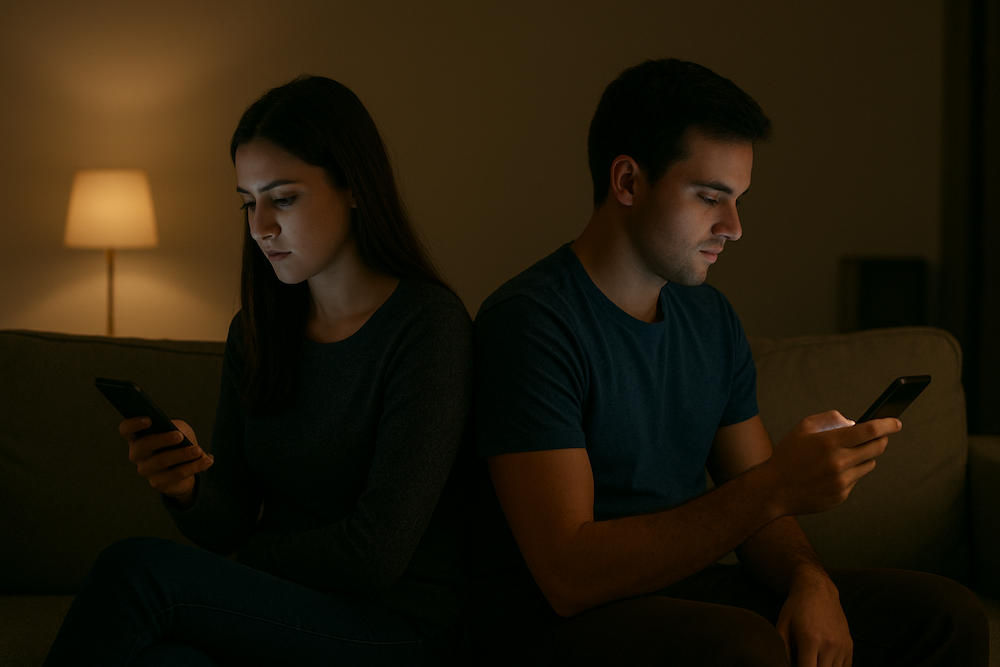
The scariest part about social media’s effect on relationships is that it happens quietly.
No sudden fights, no dramatic breakups — just small emotional drifts.
You start feeling misunderstood, unseen, or disconnected without knowing why.
Then one day, you realize your partner feels more like a roommate than a lover — and most of your emotional energy goes to your phone instead of your relationship.
This slow drift is reversible — but it takes awareness.
Start by recognizing your online habits.
Ask yourself:
- Do I reach for my phone before greeting my partner?
- Do I scroll when we’re supposed to talk?
- Do I post to connect, or to be seen?
These questions can help you rebuild presence, intimacy, and real emotional connection.
9. Reclaiming Real Connection
So how do we fight back?
How do we keep social media from ruining what matters most?
Here are a few practical steps:
- Set Boundaries – Agree on screen-free times or “no-phone” hours together.
- Be Present – When spending time with loved ones, keep your phone out of reach.
- Don’t Overshare – Protect your private moments; they don’t need validation online.
- Communicate Honestly – If something online bothers you, talk about it openly.
- Follow with Intention – Unfollow accounts that trigger insecurity or unrealistic comparison.
- Post Mindfully – Ask yourself why you’re sharing — connection or attention?
Remember, social media should enhance your life, not replace it. You can still enjoy it — just don’t let it become your emotional substitute for real love and presence.
Conclusion: Choose Real Over Virtual
At its best, social media is a tool — not a replacement for intimacy.
It can help you connect, learn, and stay inspired. But if you’re not careful, it can also quietly eat away at the foundation of your relationships.
So, pause for a second.
Look away from your screen.
Look at the people who love you — the ones right beside you.
That’s where real connection begins.
Because no amount of likes, followers, or stories can replace the warmth of genuine love, the sound of shared laughter, and the comfort of being truly seen.