
7 Ways to Teach Your Child Emotional Intelligence (That Will Shape Their Future)
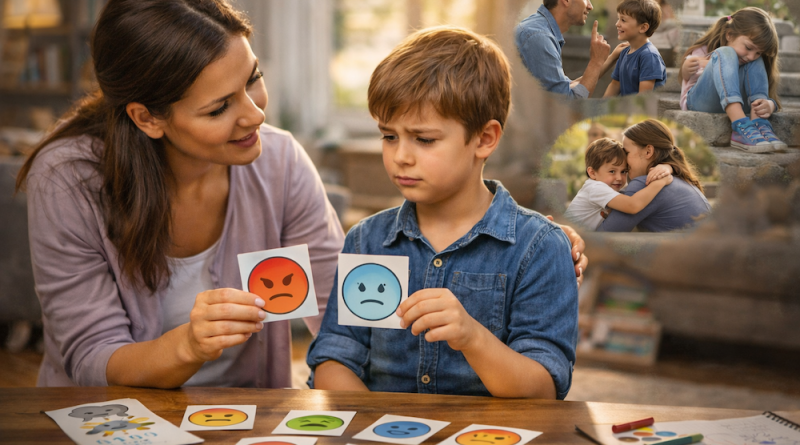
Raising a child is not just about good grades, clean clothes, or proper manners. Parenting also involves guiding them to understand and manage their emotions.
This skill is called emotional intelligence.
Emotional intelligence refers to the ability to recognize, understand, manage, and express emotions wisely. It also includes understanding other people’s feelings. A child who develops emotional intelligence early will grow into an adult who builds healthy relationships, handles stress well, and makes thoughtful decisions.
The good news is that emotional intelligence can be nurtured.
Here are 7 practical ways to teach your child emotional intelligence in everyday life.
1. Teach Your Child to Name Their Emotions
Children often act out because they do not have the words to explain what they feel.
Instead of saying, “Stop crying,” try helping them label the feeling.
You can say:
- “Are you feeling frustrated?”
- “You look disappointed.”
- “That must have made you angry.”
When children learn to name their emotions, they feel understood. Gradually, they begin to identify their own feelings without help.
Using a broad emotional vocabulary is key. Instead of only “happy” or “sad,” teach words like:
- Excited
- Nervous
- Embarrassed
- Jealous
- Proud
The goal is not to stop emotions. The goal is to help children understand them.
2. Validate Their Feelings (Even When You Correct Behavior)
Many parents try to fix emotions quickly. However, children need validation before correction.
Validation does not mean agreeing with bad behavior. It means acknowledging the feeling behind it.
For example:
- “I understand you are angry, but hitting is not okay.”
- “I know you feel upset that playtime is over.”
When children feel heard, they calm down faster. If they feel dismissed, they tend to escalate.
Validation teaches a powerful lesson:
My feelings matter, but I am still responsible for my actions.
This balance builds emotional maturity.
3. Model Emotional Intelligence Yourself
Children do not learn emotional intelligence from lectures. They learn it by observing you.
If you shout when stressed, they learn shouting. When you apologize for mistakes, they learn accountability. Talking about your feelings calmly teaches them regulation.
You can say:
- “I am feeling overwhelmed right now. I need a few minutes to calm down.”
- “I was wrong earlier. I am sorry.”
Parents who show healthy emotional habits naturally influence their children. Actions speak louder than words.
4. Teach Problem-Solving Instead of Blame
When your child faces conflict, resist the urge to solve it immediately.
Try asking guiding questions:
- “What happened?”
- “How did that make you feel?”
- “What do you think we can do next time?”
This approach helps children connect emotions to actions.
For example, if your child argues with a sibling, you might guide them through:
- Identifying why they felt angry
- Describing how they responded
- Exploring a better way to handle the situation next time
Over time, your child becomes more emotionally independent. They learn to take responsibility for their feelings and actions.
If you enjoy exploring emotional growth in families, check out our post: “The Truth Behind a Daughter’s Doubts About Her Mother’s Love.” It explains how misunderstandings can shape parent-child relationships.
5. Encourage Empathy Through Everyday Moments
Empathy lies at the heart of emotional intelligence.
Encourage your child to consider other people’s feelings. Simple daily experiences work well:
- When watching a movie, ask, “How do you think that character feels?”
- When a friend is upset, ask, “What do you think they need right now?”
- When someone makes a mistake, ask, “Have you ever felt that way?”
These conversations expand their perspective. This understanding reduces selfish behavior and increases kindness. Empathy also lays the foundation for strong friendships and healthy future romantic relationships.
6. Create a Safe Space for Honest Conversations

Children hide emotions when they fear punishment or rejection.
A safe environment allows them to discuss:
- School struggles
- Peer pressure
- Fears
- Shame
- Mistakes
Create emotional safety by:
- Listening without interrupting
- Avoiding harsh judgment
- Staying calm during difficult conversations
Approval is not required for every statement they make. What matters is that your child feels safe expressing themselves.
Emotional safety strengthens trust and prevents distance in future relationships.
If you want more insight into building strong emotional foundations, read: “Vulnerability: The Glue of Long-Term Relationships.” It shows why openness strengthens connections.
7. Teach Healthy Coping Skills
Emotional intelligence is not about suppressing feelings. It focuses on managing them in healthy ways.
Help your child build a toolbox of coping strategies:
- Deep breathing
- Counting to ten
- Drawing or journaling
- Taking short breaks
- Talking about feelings
Practice these skills during calm moments, rather than waiting for a meltdown.
You can also turn coping skills into fun games for younger children:
- Blow “birthday candles” to practice deep breathing
- Squeeze a pillow when feeling angry
Through these exercises, children learn that emotions are temporary and manageable. Confidence grows as they realize they have tools to cope with challenges.
Why Emotional Intelligence Matters More Than Ever
In today’s world, children face social pressure, digital influence, and emotional overstimulation.
Academic success alone is not enough.
A child with emotional intelligence:
- Handles disappointment without collapsing
- Builds healthy friendships
- Communicates clearly
- Apologizes when wrong
- Sets boundaries respectfully
- Resists peer pressure
Researcher Daniel Goleman popularized the concept of emotional intelligence. His work highlights that emotional skills often predict life success more reliably than IQ.
This insight reminds us that emotional training is essential, not optional.
Common Mistakes Parents Make (And How to Avoid Them)
Even loving parents can unintentionally hinder emotional growth.
Dismissing emotions: Saying “You’re fine” when they are clearly upset teaches emotional suppression.
Overprotecting: Solving every problem prevents children from developing resilience.
Shaming feelings: Phrases like “Boys don’t cry” or “Good girls don’t get angry” create confusion.
Instead, allow feelings and guide behavior simultaneously.
Emotional Intelligence Across Ages
Emotional growth happens in stages:
Toddlers:
- Begin labeling basic emotions
- Need help calming down
School-Age Children:
- Understand fairness
- Start recognizing others’ feelings
Teenagers:
- Experience complex emotions
- Need support navigating identity and peer influence
Patience is crucial. Emotional intelligence develops gradually.
The Long-Term Impact of Teaching Emotional Intelligence
Teaching emotional intelligence shapes much more than childhood behavior.
Children with emotional skills:
- Manage stress
- Build strong relationships
- Thrive academically and socially
- Gain self-confidence
- Resolve conflicts effectively
Understanding emotions leads to deeper friendships, healthier romantic relationships, and better workplace interactions. Most importantly, children learn to understand themselves.
Final Thoughts: Start Small, Stay Consistent
You do not need special training to raise an emotionally intelligent child.
Patience, consistency, and active listening are enough. Start by labeling one feeling today. Validate one emotion tomorrow. Practice one coping skill this week.
Small, consistent actions create lifelong benefits. Emotional intelligence is not about raising a perfect child—it is about raising a self-aware, compassionate, and resilient human being.
This is one of the greatest gifts a parent can give.